Adolescent/Teen Dental Care
A healthy, beautiful smile starts here

Adolescent/Teen Dental Care | Dentist
Improve your smile today – call to schedule a consultation!
Claim Now!

Adolescent/Teen Dental Care


Dental Care for Teens

The teenage years can be especially hard on teeth. Teenagers are often so preoccupied with school, jobs, sports, and social activities that they neglect their oral health. The combination of hormonal changes, poor dietary choices, and neglecting to brush and floss regularly is why many teenagers develop cavities.

Tips to help your child get through the teen years cavity-free:

  • A nice smile is important to your teen’s self-image. You can encourage and support your teen in developing and continuing good brushing and flossing habits. 
  • Teenagers are self-conscious and care about how they look. The fact is, poor self-care can lead to embarrassment caused by bad breath, stained teeth, decays, fractures, and other dental problems. 
  • Setting a good example is crucial with this age group. Take good care of your own teeth so that your teenager can see that good oral health is one of your family's values. You might be surprised to find out how much weight your advice and guidance can carry with a teen! 
  • Avoid buying junk food. Encourage your teen to choose fruits and vegetables for snacking. Steer clear of sodas as well as sports and energy drinks. The sugar and acids found in these popular beverages increase the risk for tooth decay.
  • Teach your kids about the risks associated with tobacco. Not only does smoking and chewing tobacco increase the risk for oral cancer, tobacco use can also lead to cavities, gum recession, and gum disease.
  • Teach teens about the hazards associated with oral piercings. Mouth jewelry increases the risk for chipped or cracked teeth and even bacterial infections.
  • Encourage the use of mouth guards since they can protect teeth from serious injury and may even reduce the risk of a concussion from a blow to the chin or jaw.
  • Talk to your teen about eating disorders. Conditions such as anorexia and bulimia can lead to erosion of enamel, cavities, and inflammation of the gums, and can eventually cause tooth loss.

Frequently Asked Questions

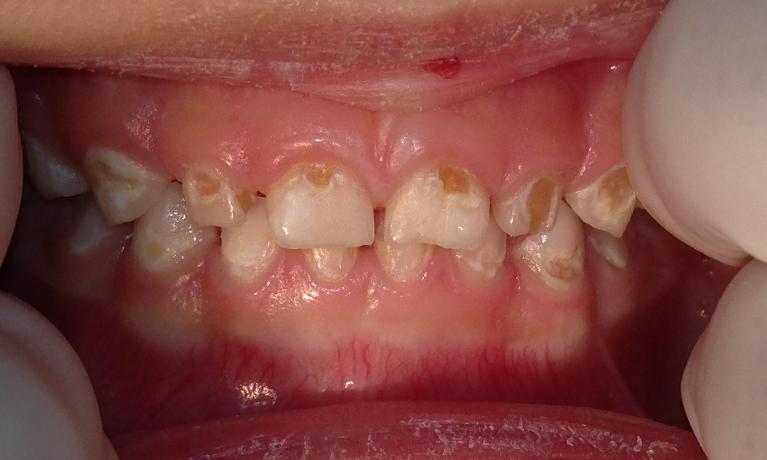
Baby bottle tooth decay (also called early childhood caries and nursing caries) takes place when a baby’s first teeth are frequently in contact with sugar. This sugar often comes from sweet drinks like fruit juice, milk, flavored water, and formula.  

As the bacteria in your baby's mouth break down the sugars, they produce acid, which eats away at the teeth, causing tooth decay. If left untreated, decayed teeth are quite painful, and your baby may try to avoid chewing and eating.

If baby teeth are decayed, become infected, or are lost early, they can prevent the permanent teeth from erupting into their proper positions. When baby teeth are badly decayed, they can become severely infected with the possibility of that infection spreading elsewhere.

Children should not be permitted to take a bottle to bed. Ideally, children should be weaned from the bottle by 12 months of age. Additionally, a "sippy cup" should only be used to transition your child from the bottle to a regular cup.

Scheduling your child’s first dental visit at Sporting Smiles by their first birthday is a great opportunity to learn how to keep your child happy, healthy, and cavity free. We are your partners i health and will work with you closely to keep your child's smile in great shape!

At Sporting Smiles, we stress the importance of starting healthy habits early.

From the moment you bring your baby home, start cleaning your baby’s mouth before he or she even develops those first few teeth. Your baby's gums and tongue can be effectively cleaned with moistened gauze, a soft cloth, or a silicone fingertip brush while you are giving your baby a bath. Developing this habit early makes it easier for both you – and your child – to stick with it.

When your child’s first tooth erupts, you can make the switch to a soft-bristled toothbrush with a small head. These are available for infants, and we are happy to provide a product recommendation if you'd like. Use this brush at least twice a day, and particularly at bedtime, to remove the bacteria build-up that leads to decay.

Children often do not have the manual dexterity needed to effectively clean their teeth. For this reason, we recommend brushing for your child until they are 8 years of age and flossing for them until they are 10 years of age.

To learn more about fluoridated toothpaste and other recommended products, please call our Gainesville, VA dental office today. A diligent approach to home care now will help your child maintain optimal oral health. 


The chewing surfaces of your teeth, particularly the ones in the back, have a number of deep grooves. These grooves have a tendency to trap food particles, which makes them prone to cavities.

We apply sealants to fill in these grooves, a fast, comfortable, and effective preventive treatment that protects the teeth for several years. Sealants are a thin plastic coating that we paint onto the surfaces of the teeth and then cure to harden into place. Because they are tooth-colored and usually placed on the back teeth, they are mostly unnoticeable and don't interfere with your child's dental development or ability to speak and chew foods. Your child's safety is important to us, so at Sporting Smiles, we provide sealants that are 100% BPA free.

We typically recommend sealants on all permanent molars with deep grooves once they are fully erupted. If a child is at very high risk for developing cavities, we may also recommend sealing baby teeth.

Each child’s individual needs are taken into account when deciding on a plan for treatment. Call our Gainesville pediatric dental office today to schedule a visit. We'll discuss your child's needs with you and determine the best way to protect their teeth throughout their childhood.

Active patients at Sporting Smiles Pediatric Dentistry & Family Orthodontics can request to have a custom form-fitting mouthguard for a fee. Our staff will take an impression to create a custom mouthguard and will make adjustments to ensure the best fit.

Our doctors may also recommend off-the-shelf mouthguards that can be purchased at local sporting goods stores.

Mouth guards can be used to protect a child’s teeth, lips, cheeks, and gums from sport-related injuries. While ‘boil and bite’ mouthguards are effective, a custom-fitted mouthguard developed by a pediatric dentist will ideally protect your child from injuries to the teeth and face and even provide protection from severe injuries to the head, including concussions.

Meet Our Doctors:

Natasha Khurana, DDS, IBCLC

Dr. Khurana is a Diplomate of the American Board of Pediatric Dentistry. She earned her dental degree from the University of Maryland and attended New York University’s College of Dentistry ...

Nirali Mehta, DMD, IBCLC

Dr. Nirali Mehta was born and raised in beautiful Northern Virginia. She received her undergraduate degree at Virginia Tech, in Blacksburg, Virginia (Go Hokies!) before moving to Glendale, Arizona, where ...

Monica Dinh, DDS, MS

As a skilled, board certified orthodontic provider, Dr. Monica Dinh is committed to providing patients with the highest quality of orthodontic care. Born and raised in Northern Virginia, Dr. Dinh ...

Featured Blog Posts - Adolescent/Teen Dental Care

July 6, 2017

Top Tips For Teeth

Brush for two minutes, twice a day, with fluoride toothpaste.
Research shows more than 70 percent of people do not brush correctly. Infants and toddlers, 0 – 3 years old, should use toothpaste with a fluoride level of at least 1,000ppm (parts per million). Children 3+ years old, should use a toothpaste that contains 1,350 – 1,500ppm.
 
Use dental floss or interdental brushes to clean between your teeth at least once a day.
Only 21 percent of people clean between their teeth regularly.
 
Change your toothbrush every 3 months.
Only 22% of people change their toothbrush every three months.
 
Cut down on how often you have sugary foods and drinks between ...
July 20, 2016

How to Encourage Your Children to Take Dental Care Seriously

Dental care in Gainesville and oral health is not something that ranks high in the list of priorities of children. And it is perfectly understandable. For kids, their priorities are more on fun and games, candies, food, and hanging out with friends. You might find it to be a little odd or rare to have your child come up to you and say he wants to visit the dentist unless he has a toothache or has a really bad cavity.

So how can a parent, like yourself, be able to encourage his kid to visit the dentist without having ...

May 9, 2016

How to Ensure Child Dental Care at Home

Getting proper dental care at home is important because after our milk teeth, you will only have one set of permanent teeth so you better take care of it as early as possible. And when it comes to your children, you should really start your children early.

You need to remember that the oral health of your children is always a priority. You should not only take notice before his dental appointment. In fact, you should always practice good oral hygiene even at home. You teeth will thank you for it, and your children’s teeth will thank you for ...

Getting an appointment is fast and easy!
Get Started!